During the production process of components, hole machining is typically necessary to ensure the part’s quality. Holes must meet specified dimensional accuracy and surface quality requirements to maintain part integrity. Types of holes include cylindrical holes, conical holes, threaded holes, and formed holes. When machining holes, drilling is performed according to given basic dimensions and accuracy requirements, and during inspection, it is crucial to ensure that the hole dimensions fall within their tolerance limits.
Common inspection instruments for holes include internal calipers, plug gauges, internal micrometers, and dial indicators, all of which belong to mechanical contact measurement. These instruments are advantageous for their simplicity, ease of operation, and lower cost but may introduce inaccuracies in measurement precision due to their contact-based nature.
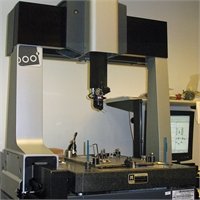
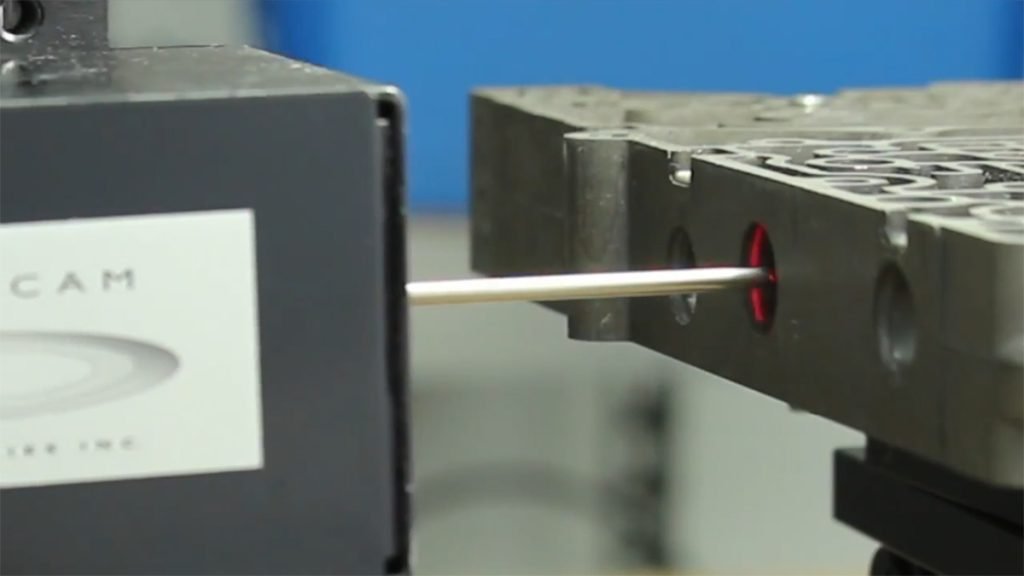
In addition to conventional methods, hole inspection can also utilize advanced, high-precision techniques such as optical reflection, electromagnetic testing, and machine vision inspection. These non-contact methods are capable of measuring hole dimensions and surface accuracy with high precision and efficiency. However, they typically come with higher costs and require more sophisticated operational skills.
Regardless of the complexity of the instruments used, environmental conditions play a crucial role, especially for non-contact instruments that have higher demands on workplace environments. Factors such as temperature, vibration, lighting, and spatial arrangement need to be carefully considered during operation to ensure accurate measurements.
孔的常规检验仪器有内卡钳测量、塞规检验、内径千分尺和百分表等测量仪器,它们都属于机械接触式检测。这些仪器的优点是简单易操作,成本较低,但是会造成检测精度的不准确,同时接触式检测有可能对孔的精度造成影响。
此外孔的检验还具有新型的、高精度的检测方法,包括反射光法、电磁检测法、机器视觉检测等一系列非接触式检测方法。这些方法的特点都属于非接触式的检测方法,既可以检测孔的尺寸精度,也可以检测孔的表面精度等,具有高精度、高效率的优点,但成本较高,操作要求较高。
无论简单或者复杂的仪器都需要一定的环境条件,尤其是非接触式仪器,对工作环境的要求较高。我们在使用过程中需要考虑环境的温度、振动、光线、空间布置等因素。